
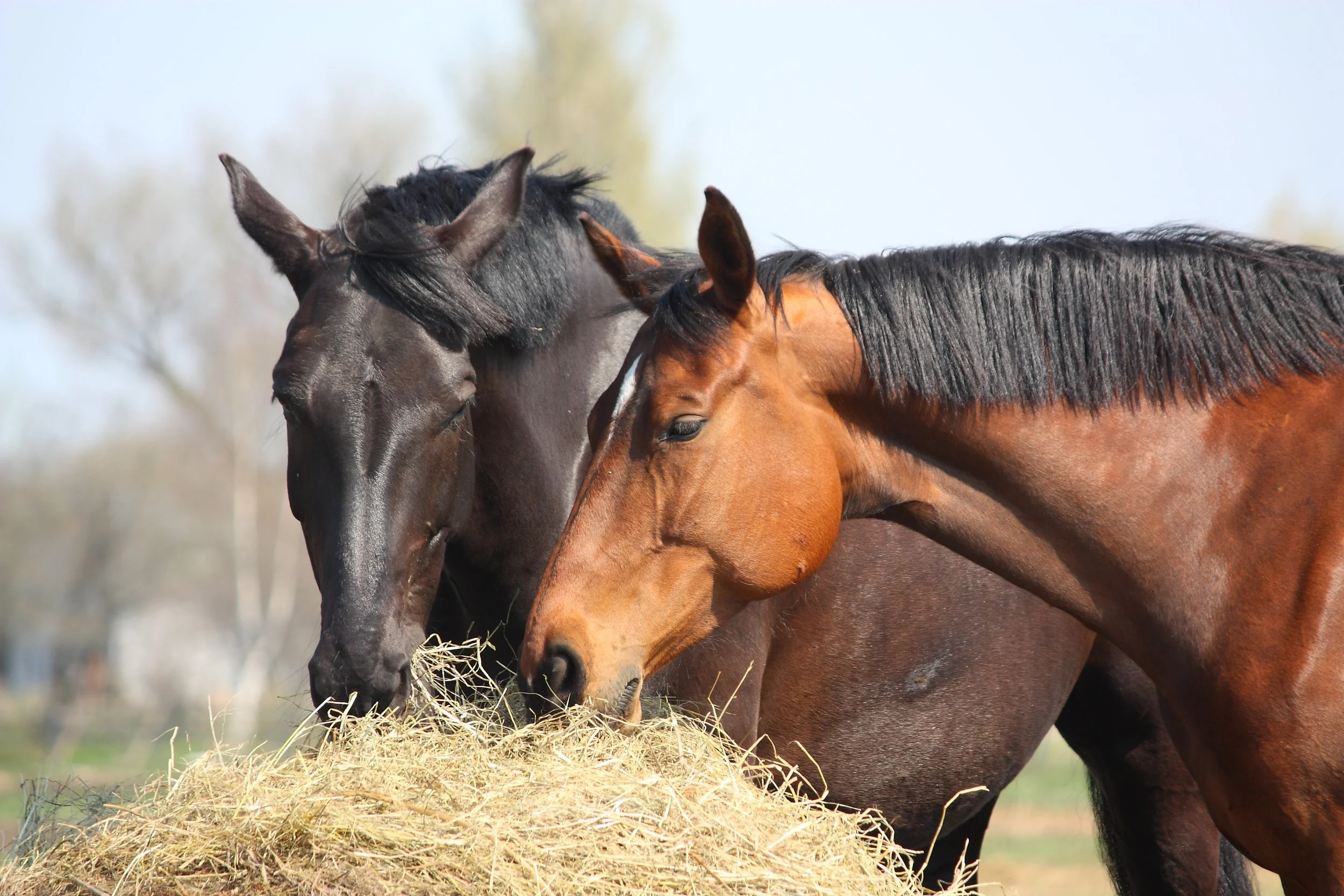
For many horse owners, spring brings longer days and fresh green grass. However, for owners of horses and ponies with a history of laminitis, the season can also bring heightened anxiety. While horses and ponies carrying excess body condition are commonly associated with endocrinopathic laminitis, some normal-weight or underweight horses can also be at risk. This is particularly relevant in older horses with pituitary pars intermedia dysfunction (PPID), where muscle loss and declining body condition may coexist with insulin dysregulation. Not every horse with PPID has insulin dysregulation; veterinary testing helps assess individual risk.
The key is finding a feeding approach that supports safe weight gain without increasing the risk of laminitis.
Pryde's equine nutritionist Bethanie Gagliardi said many owners are surprised to learn that laminitis is not exclusively linked to obesity.
"One of the biggest misconceptions we see is that only overweight horses develop laminitis," Gagliardi said.
"In reality, horses with underlying metabolic conditions can be underweight and still be highly susceptible. The challenge is providing sufficient calories to support weight gain while carefully managing dietary sugar and starch intake."
Understanding why laminitis occurs and which feeding strategies are safest can help owners confidently navigate the high-risk spring period.
We've outlined strategies for safely feeding the underweight laminitis-prone horse.
1. Understand the underlying cause of laminitis
Insulin-associated laminitis is a common form of laminitis. Insulin dysregulation is central to equine metabolic syndrome and can also occur in horses with PPID. Relevant endocrine conditions include:
Equine metabolic syndrome (EMS)
Pituitary pars intermedia dysfunction (PPID or Cushing's disease)
Horses with insulin dysregulation may produce excessive insulin after consuming sugar and starch. Elevated insulin concentrations are a primary driver of endocrinopathic laminitis. In forage analysis, non-structural carbohydrates (NSC) commonly means water-soluble carbohydrates (WSC, including sugars and fructans) plus starch. This differs from ethanol-soluble carbohydrates (ESC) plus starch, so laboratory results and feed specifications must be compared using the same measure.
Importantly, body condition alone does not determine risk. While obesity remains a major risk factor for insulin dysregulation and laminitis, horses with PPID or other endocrine disorders may develop laminitis even when they are of normal weight or underweight.
2. Manage spring pasture carefully
Spring pasture presents one of the biggest challenges for laminitis-prone horses.
Pasture NSC concentrations vary with grass species, sunlight, temperature and plant stress. Conditions that can favour carbohydrate accumulation include:
Bright sunlight when growth is limited by cool temperatures
After sunny days followed by frosty nights
During periods of pasture stress, including drought, frost or overgrazing
NSC concentrations often rise during sunny days and decline overnight when conditions allow continued plant growth. However, they can remain elevated after cold or frosty nights. Rainfall or rapid growth alone does not reliably predict carbohydrate content, and early-morning grazing is not automatically safe.
To reduce risk:
Restrict access to high-risk pasture
Allow grazing in early hours of the morning, only when approved by a vet following an individual risk assessment
Do not rely on a fixed turnout window; some highly susceptible horses may need pasture excluded altogether
Monitor seasonal changes closely
3. Build the diet around low-NSC hay
Forage should form the foundation of any weight-gain program for a laminitis-prone horse.
For horses with insulin dysregulation, a conservative published recommendation is to select diet components containing no more than 10% NSC on a dry-matter basis. This is a management target, not a guarantee of suitability for every horse. A vet and equine nutritionist should interpret the carbohydrate analysis and balance sufficient calories for gradual weight gain.
For an underweight horse, the vet and nutritionist may consider approximately 2–3% of bodyweight per day as forage dry matter, adjusted to the horse's condition, intake capacity and metabolic response. This is not a universal prescription, particularly for horses with active laminitis or other health problems.
For a 500 kg horse, 2–3% of bodyweight equates to 10–15 kg of forage dry matter daily—not 10–15 kg of hay weighed as fed. Calculate the actual hay allowance using its measured dry-matter percentage and account for other forage in the ration.
Potential forage options include the following, but every hay batch should be tested; species alone does not establish suitability:
Rhodes grass
Lucerne
Native grass hay
Teff
Soaking can reduce soluble carbohydrates, but the reduction varies and soaking does not guarantee that untested hay is suitable. Use forage analysis and veterinary advice to decide whether soaking is appropriate. Lucerne is often relatively low in NSC and may provide useful calories, but its suitability also needs to be confirmed by testing.
Oaten, wheaten, barley and ryegrass hay can contain substantial NSC and are generally unsuitable for laminitis prone horses.
4. Choose a suitable low-NSC fortified concentrate feed
When additional calories are needed, selecting an appropriate concentrate feed is critical.
Look for a feed that:
Has a total NSC content of less than 12%
Is free from grain and grain by-products, such as EasiSport, while also meeting the horse's individual carbohydrate requirements
Provides high-quality protein sources such as soybean meal
Is fortified with essential vitamins and minerals
Supports condition gain without excessive starch intake
Owners should read both ingredient labels and nutrient analyses, even on products marketed as grain-free. A ‘grain-free’ claim does not automatically mean suitable for an insulin-dysregulated horse. Assess the finished feed's carbohydrate content, meal size and contribution to the whole ration.
It is best to avoid feeds containing grain and grain by product ingredients including:
Wheat
Barley
Corn
Oats
Rice
Triticale
Rye
Millrun
Millmix
Bran (rice or wheat)
Pollard
Middlings
5. Add appropriate calories when extra condition is needed
Some horses require additional energy beyond their forage and fortified concentrate feed allocation.
If more calories are needed, discuss oil and fibre-based options with a vet or equine nutritionist. Products to assess within the individual ration include:
EasiOil
EasiFibre, LupinPak and ProteinPak
EasiFibre, LupinPak and ProteinPak are not complete feeds and do not contain added vitamin-and-mineral premixes, so the overall ration must still meet vitamin and mineral requirements.
6. Maximise forage consumption time
Healthy weight gain is not simply about how much a horse eats, but also how long it spends eating.
Extending the time spent eating forage can:
Reduce gorging behaviour
Improve digestive function
Support hindgut health
Minimise boredom and stress
Improve feed utilisation
Helpful tools include:
Slow feeders
Multiple hay nets
Round bale nets
Porta-Grazers and similar forage systems
A healthy digestive system often translates to better feed conversion and more efficient weight gain.
7. Monitor progress regularly
Successful weight gain should be gradual and measured.
Owners should:
Assess body condition score weekly
Weigh feed accurately
Adjust rations as necessary
Take regular progress photographs
Monitor closely for any signs of foot soreness or laminitis flare-ups
Consistent monitoring helps ensure weight is being gained safely without compromising metabolic health.
Professional Insight
According to Bethanie Gagliardi, managing the underweight laminitis-prone horse requires balancing two competing priorities: increasing calorie intake while carefully controlling sugar and starch consumption.
"The safest approach is to think fibre first. High-quality low-NSC forage should form the basis of the diet, with additional calories coming from carefully selected low-starch feeds and supplements. This is especially important in older horses with PPID, where maintaining body condition and muscle mass can be challenging while still requiring careful control of dietary sugar and starch. Rapid dietary changes or relying on spring grass for weight gain can increase the risk of a setback.
She also emphasises that every horse's requirements are different, particularly when conditions such as EMS or PPID are involved.
"Regular monitoring is essential. If a horse isn't gaining weight as expected, it's important to review the entire diet rather than simply increasing feed volume. The goal is sustainable condition gain while keeping insulin levels under control."
FAQs
1. Can an underweight horse get laminitis?
Yes. Although overweight horses are more commonly affected by endocrinopathic laminitis, horses with conditions such as PPID or insulin dysregulation can develop laminitis even when they are of normal weight or underweight.
2. Why is spring considered a high-risk period?
Spring pasture can contain elevated NSC, but concentrations depend on species, sunlight, temperature and plant stress—not rainfall or rapid growth alone. Cold or frosty nights can leave carbohydrate concentrations elevated into the morning. No fixed grazing window is safe for every susceptible horse; seek veterinary advice on whether any pasture access is appropriate.
3. What does NSC mean?
NSC stands for non-structural carbohydrates. In forage analysis, it commonly means water-soluble carbohydrates, including sugars and fructans, plus starch. It is not the same as ESC plus starch. For insulin-dysregulated horses, a conservative published target is no more than 10% NSC on a dry-matter basis, interpreted by a vet or nutritionist for the individual horse.
4. How much hay should a skinny laminitis-prone horse receive?
The allowance must be individualised. A vet and nutritionist may consider approximately 2–3% of bodyweight daily as forage dry matter for an underweight horse, adjusted for health, intake and metabolic response. For a 500 kg horse, that is 10–15 kg of forage dry matter, not hay weighed as fed. Test each hay batch, calculate the as-fed amount from its dry-matter content and account for other forage. Soaking does not guarantee that untested hay is suitable.
5. Can grain-free feeds still contain ingredients that may not be suitable?
Yes. A grain-free label alone does not establish suitability. Check the finished feed's ingredients, NSC levels, meal size and contribution to the whole ration.
6. What is the safest way to increase calories?
With veterinary and nutritional guidance, use tested low-NSC forage and carefully selected fortified concentrate feeds, oils or fibre-based supplements rather than relying on high-starch feeds. Assess each product within the whole ration; grain-free supplements are not automatically suitable or nutritionally complete.
7. How quickly should an underweight horse gain weight?
Weight gain should be gradual and monitored closely through body condition scoring, feed assessments and regular progress photos.
8. What is the most important feeding tip for these horses?
Maintain a diet that is low in sugar and starch, minimise access to high-risk pasture, and make all feed changes gradually over a period of at least two weeks.