
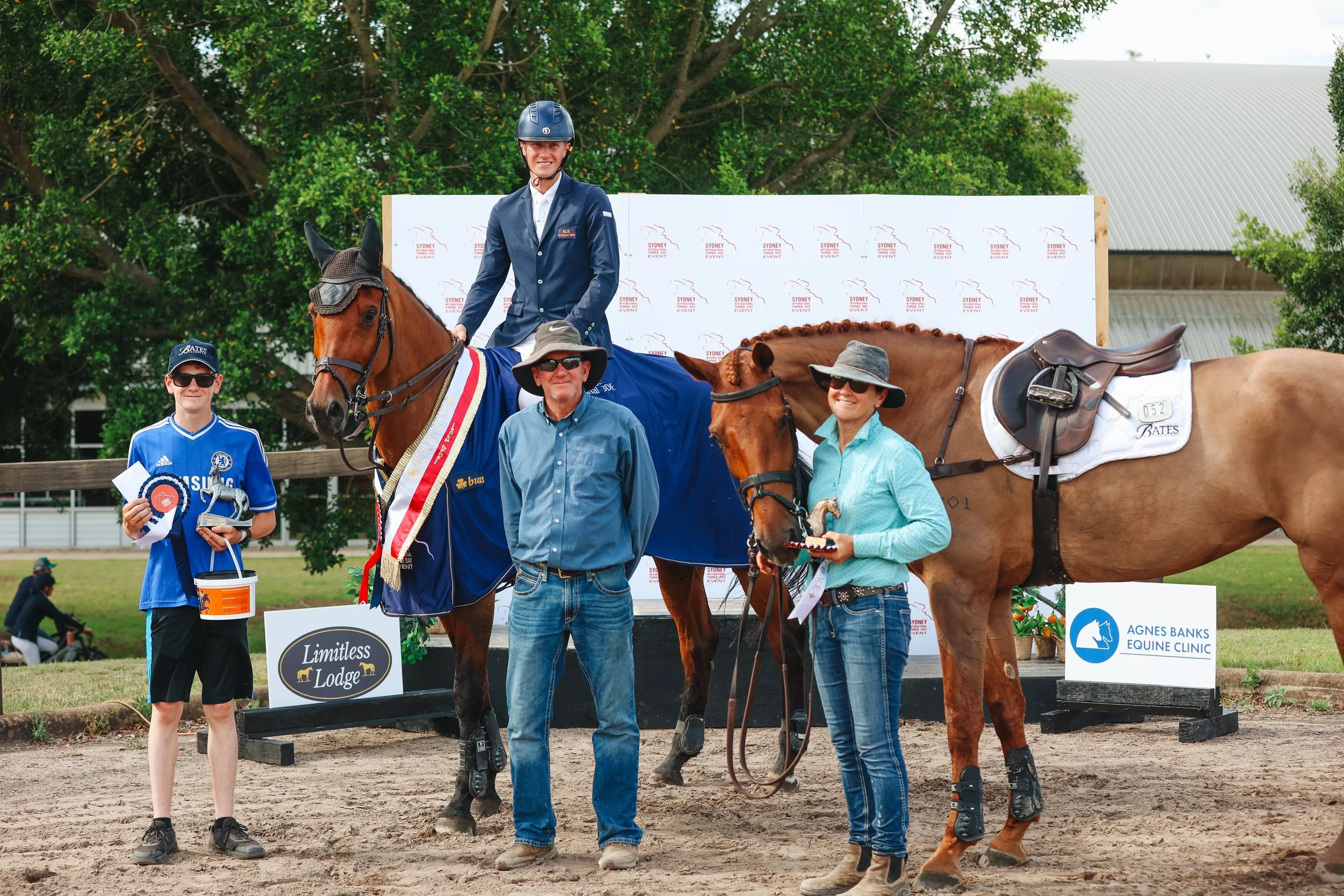
Prue Barrett has competed at multiple World Equestrian Games and is a highly sought after Level 3 Eventing Coach. The Sandhills owner has seen it all over her career.
Barrett was formerly Equestrian Australia’s National Performance Director for Eventing and was also Chef d'Equipe at both the London and Rio Olympic Games, guiding the Australian team to a bronze medal in 2016.
When it comes to high performance, few know more than Prue Barrett.
Pryde’s sat down with Prue to talk about horses Tying Up - and what advice she has if it happens to your horse.
What is Tying up?
“Tying Up - It’s like a muscle spasm, it is called ‘tying up’ because they literally don’t want to walk,” Barrett says after coming inside on a sweltering 40 degree day.
“There are varying degrees, but you can do blood tests to see muscle enzyme counts and what the full extent of it is and continue to monitor them in the weeks afterwards.
“Once they do it, they need rest. It’s not something they can just start a few days later, the muscle enzymes need time to repair.
“When you are in our game, you would typically need to give them two weeks to recover, and increase the workload gradually and keep a close eye on them.”
So what exactly causes a horse to tie up?
“The big three factors are stress, hormones and sugar,” Prue said.
“We’ve seen it happen before, overarching, it is traditional to see horses in high work environments in what we do, to have a high grain diet.
“Nutritionists would say a starch heavy diet. The sugar in the feed can be the real trigger for horses tying up. The other two triggers are hormones and stress.
“You are more likely to get it in a mare, with hormonal fluctuations.
“Emotional stress can also contribute, something happens in their workload, whether they get a fright, or they get asked to do something they find difficult, that could also cause stress.”
What can you do if a horse has tied up?
“We’ve traditionally fed a high grain diet to a horse doing a high level competition, but you can remove the starch and go grain free,” she said.
“With Pryde’s feed, you can change to a diet that cuts out almost all the starch and you can still compete at that level. We’ve seen first-hand horses perform at their best, at a very high level, with a grain free diet.
“Pryde’s EasiSport, EasiFibre and LupinPak are all very good and reliable for peak performance.
“We are extremely happy with Pryde’s, the overall message, especially for potential mares tying up is - they don’t need to be on a high grain, high starch diet to perform at the highest level and Pryde’s can support you with a range of products to have the horse perform at its best.
“A lot of what we do is counteracting it, and making sure it doesn’t happen to our horses. That begins with diet.”
Pryde’s EasiSport is a truly grain free and grain by-product free feed with less than 1.1% starch and 7% sugars. It is the safe feed for horses with Laminitis, Ulcers, Tying Up or Hyperactivity.
For more information on EasiSport click here. https://www.prydes.com.au/easisport